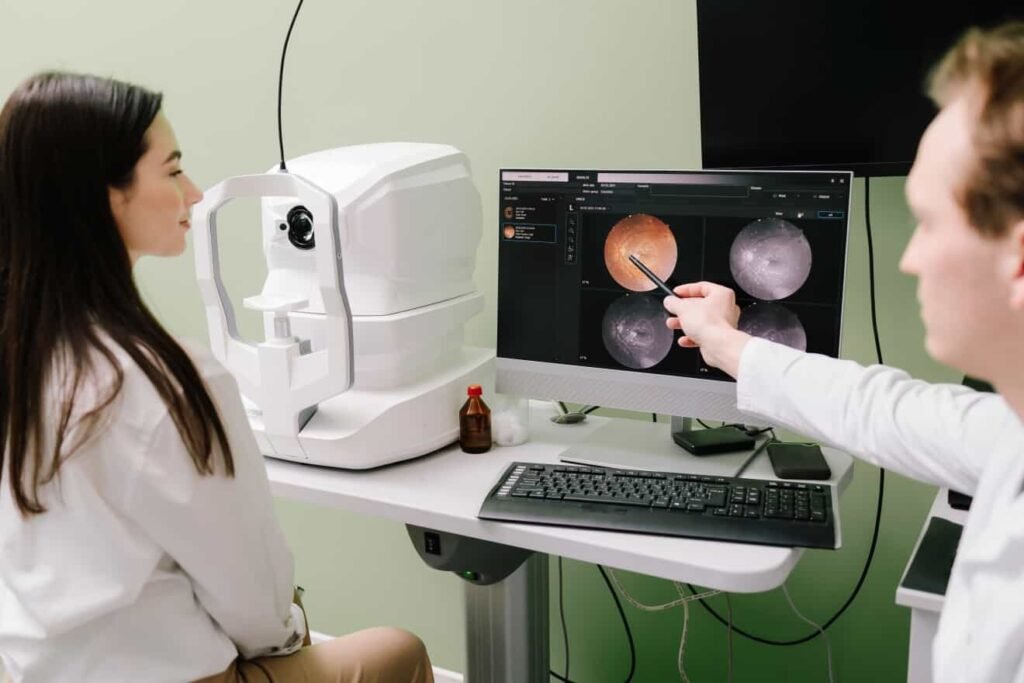
- Topcon Maestro2: Best for clinics that need predictable throughput with OCT and true-color fundus imaging in a single seat. One-touch capture and wide 12×9 mm coverage make it great for primary care. It is also suitable for diabetic evaluations and complete workflows. OCT-A is available when needed, and technician training is short.
- Optovue iScan 80: Best for lean or rotating teams where consistency matters more than customization. Voice-guided automation keeps scan placement uniform across operators, reducing onboarding time and retake rates. Ideal for satellites, high-throughput comprehensive clinics, and practices without dedicated imaging staff.
- Heidelberg SPECTRALIS: Best for disease-focused clinics that rely on precise follow-up over many years. TruTrack and AutoRescan provide the most stable longitudinal dataset, and the modular ecosystem supports advanced retina, glaucoma, and neuro protocols. The learning curve is longer, but the long-term precision is unmatched.
Topcon Maestro2 vs Optovue iScan 80 vs Heidelberg SPECTRALIS: Which is Fit for Your Clinic?
When you are ready to add or upgrade an OCT, choose a system that fits your workflow. It should match your technicians’ skills and your follow-up needs.
Maestro2, iScan 80, and SPECTRALIS often make the shortlist. They meet many clinical needs. However, they differ in how they manage real-world eyes, training needs, and daily efficiency.
We created this guide to clearly show the differences. We focus on image quality, repeatability, workflow impact, and support. This will help you choose the best platform for your clinic.
What You’ll Learn
In this guide, we break down the fundamental differences among Maestro2, iScan 80, and SPECTRALIS. You’ll see how they compare in:
- Image quality and repeatability, including tracking, noise control, and the reliability with which each device handles follow-up scans.
- Training time and day-1 usability from fully automated workflows to platforms that reward more experienced imaging staff.
- Workflow and throughput retake rates, scan stability under challenging eyes, and how each system affects the pace of a busy clinic.
- Software, data, and EMR integration consistency across visits, multi-site compatibility, and reporting clarity.
- Support, education, and total cost of ownership, what long-term use feels like, and how each platform handles growth, training, and service needs.
Image Quality & Repeatability
Consistent image quality is the foundation of meaningful OCT follow-up. It checks if a small change is real. It also sees if segmentation works. Finally, it tests if your technicians can get a good scan on the first try.
Maestro2, iScan 80, and SPECTRALIS approach this differently, and those differences appear quickly in real clinics. Here’s how they compare in everyday use.
RNFL, GCC & Macular Follow-Up
SPECTRALIS
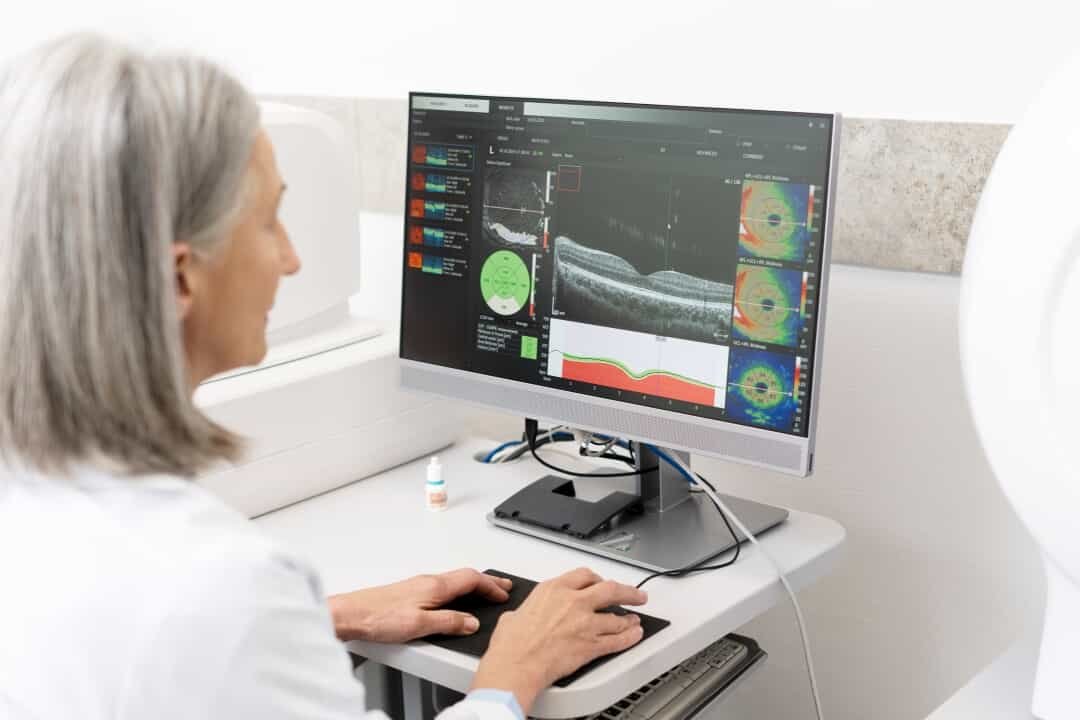
SPECTRALIS delivers the tightest scan-to-scan alignment for RNFL, GCC, and macular change analysis. Its AutoRescan feature keeps the scan at the same location on each visit, reducing positional drift. This makes long-term progression analysis more reliable, especially in glaucoma and neuro cases where small structural shifts matter.
Maestro2
Maestro2 provides steady RNFL, GCL, and macular measurements for routine glaucoma and comprehensive care. The wide 12×9 mm scan anchors both the macula and the disc in a single pass, helping to maintain context across visits. In patients who work well with us, drift is low. Consistency is usually sufficient for daily check-ups in mixed-disease clinics.
iScan 80
iScan 80 maintains consistent follow-up through its automated workflow. This workflow places the scan in the same position each visit. Standardizing positioning reduces operator-dependent variability.
This helps create reliable RNFL, GCC, and macular trend lines in busy clinics. These clinics often have many technicians sharing imaging tasks.
Widefield & 3D Coverage
Maestro2
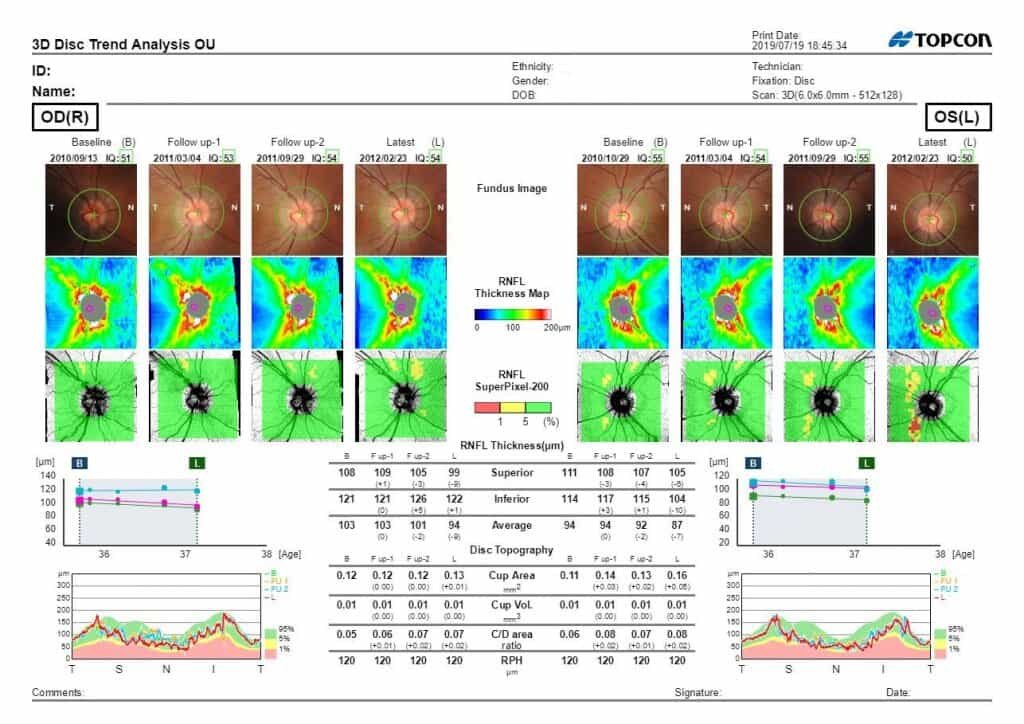
Maestro2 provides one of the widest single scans. It captures the macula and optic nerve in a 12×9 mm scan. This streamlines diabetic exams, high-myopia evaluations, and general medical retina visits by preserving the structural context without requiring additional repositioning. The wide cube also supports efficient follow-up when you need disc–macula continuity in a single view.
iScan 80
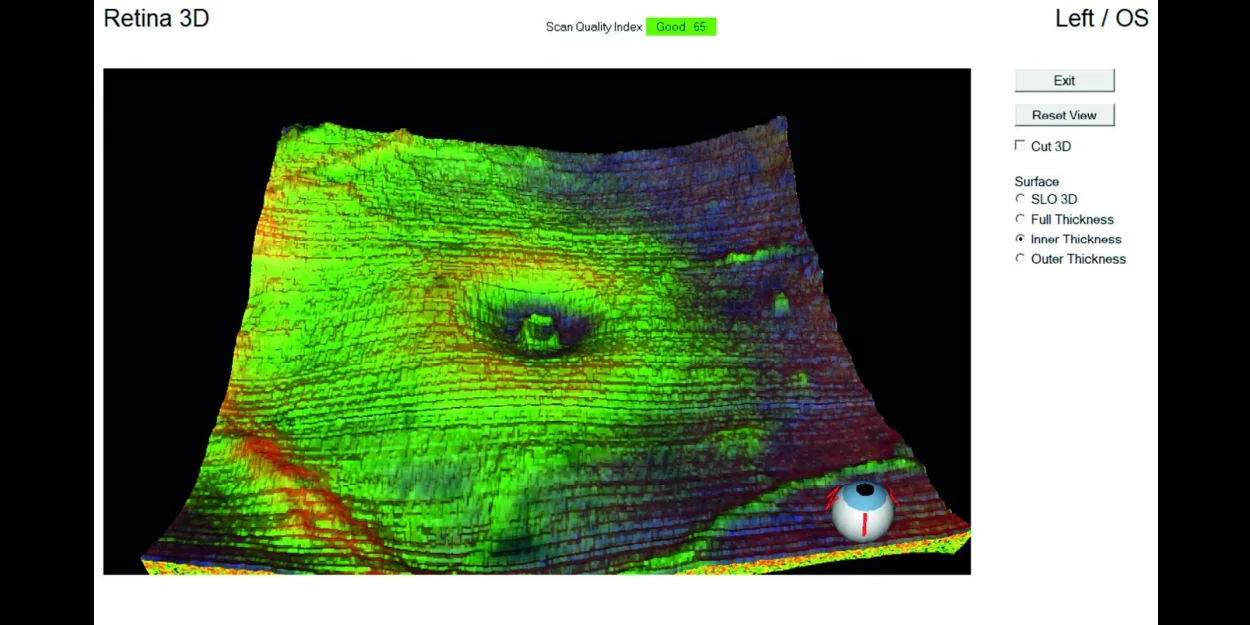
iScan 80 covers the essential 3D cubes and radial patterns optimized for predictable structural assessment. Clinics that prioritize consistency and efficiency rather than customizable scan protocols designed it. The coverage is sufficient for comprehensive exams and glaucoma co-management without adding workflow complexity.
SPECTRALIS
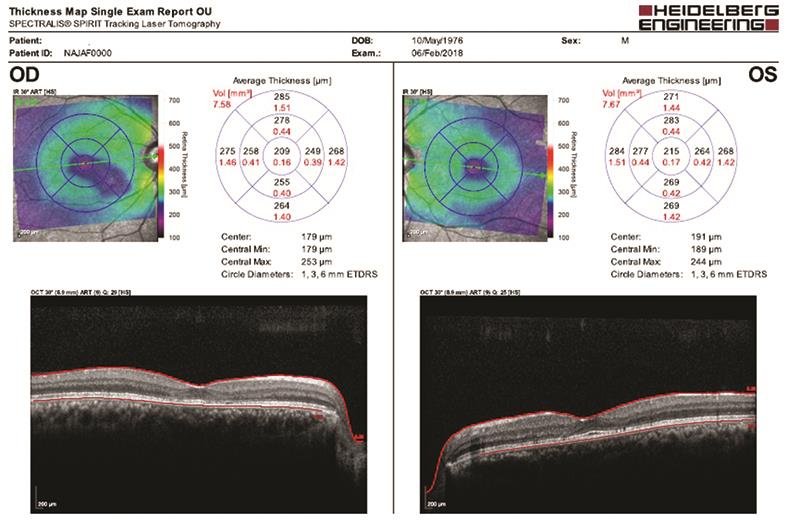
SPECTRALIS supports dense, customizable posterior pole sampling when pathology requires greater granularity. The platform lets you change the pattern, density, and direction of scans. This makes it great for clinics that focus on diseases. It is useful for targeted imaging and tracking specific lesions over time.
OCT-A Use
Maestro2
Maestro2 provides practical OCT-A for routine retina and diabetic evaluations. The slabs are clear enough for CNV suspicion, early ischemic changes, and vascular review without interrupting clinic flow. It suits practices where OCT-A is helpful but not the primary driver of imaging volume.
iScan 80
iScan 80 is usually used first for structural imaging. OCT-A is added later if the clinic needs it. Most sites use iScan 80 for RNFL, GCC, macular, and optic nerve work. They then use OCT-A based on the disease type and available training.
SPECTRALIS
SPECTRALIS is the better choice when OCT-A is a regular part of the clinic. Tracking helps stabilize the acquisition. The platform provides clearer and more reliable vascular slabs for eyes with poor fixation or unusual anatomy. Retina and disease-focused clinics often prefer this level of control.
Training Time & Day-1 Usability
The usability differences among these three systems are immediately apparent during onboarding. Some clinics need a device that any technician can learn in a single session. Others prefer more control, even if it requires a longer learning curve. Here’s how each system behaves on day one.
iScan 80 — Automation & Voice Guidance
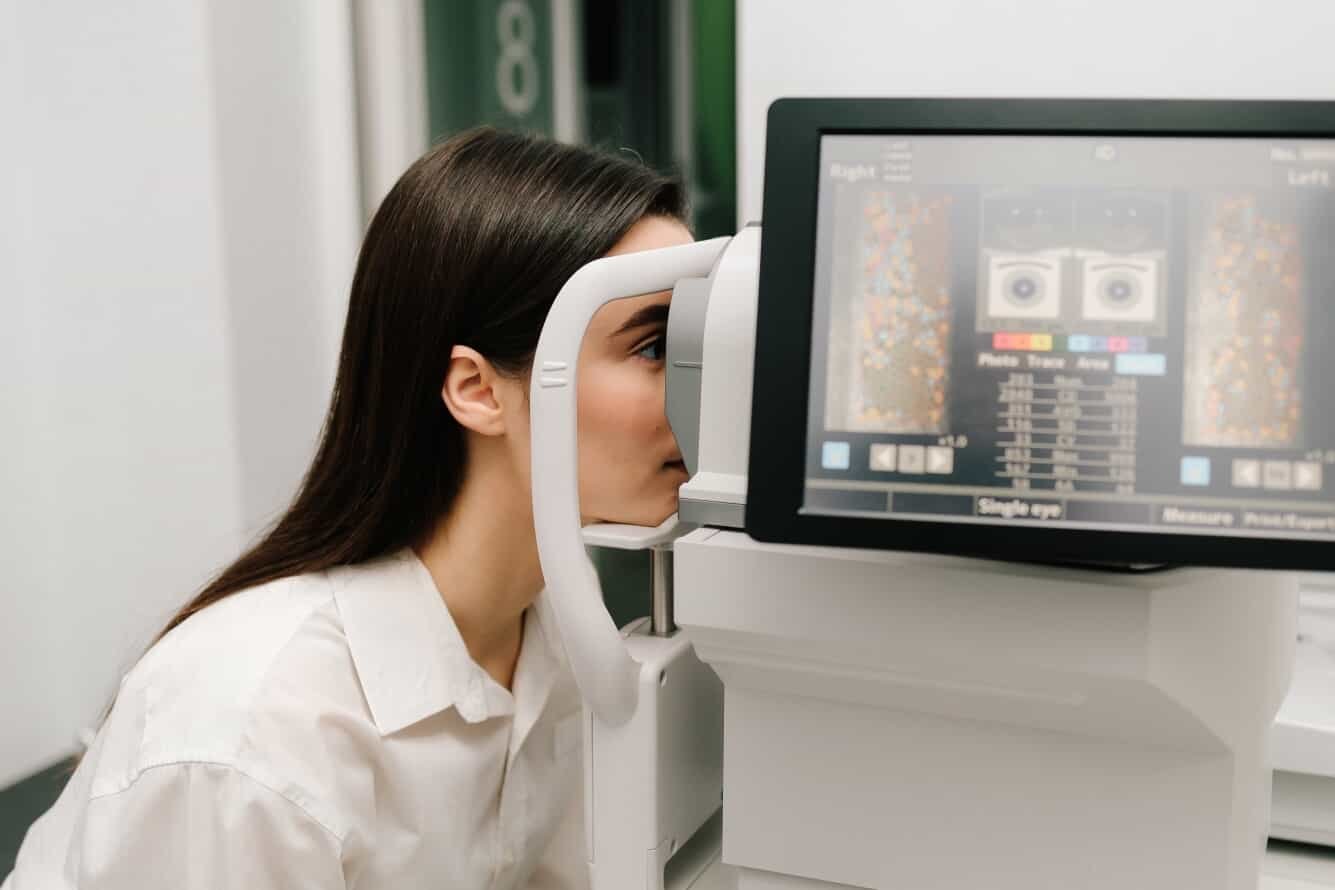
iScan 80 is the most straightforward system for new or rotating staff. The voice guidance helps the patient get into position. The automated system handles alignment, focus, scan centering, and capture with minimal operator assistance.
This reduces onboarding time from days to hours and helps maintain consistency when multiple technicians share imaging duties. Practices with lean staffing or satellite locations often choose it for this reason.
Maestro2 — One-Touch Capture & Co-Registered Fundus Color
Maestro2 is easy to onboard and quick to operate. The one-touch capture and robotic alignment enable technicians to obtain a good scan with minimal training. The true-color fundus image shows fixation and scan quality right away. Most clinics find that technicians reach complete confidence quickly, especially when fast throughput is a priority.
SPECTRALIS — Advanced Control With a Longer Learning Curve
SPECTRALIS offers deeper control and precision, but it requires more time to learn. The platform allows manual refinement, customized scan patterns, and advanced protocols that reward experienced imaging staff.
Training takes more effort than with fully automated devices. However, the benefits include better follow-up alignment and more flexible imaging options. Clinics focused on glaucoma, neuro, and retina subspecialty care usually find this learning curve worthwhile.
Workflow & Throughput
Throughput depends on how fast a device can get a clear scan. It also depends on how often retakes are needed and if the imaging station causes delays. Maestro2, iScan 80, and SPECTRALIS each approach this differently, and the differences become noticeable in busy clinics.
Maestro2 — Single-Seat OCT + Fundus, Fast Verification
Maestro2 moves patients through the lane quickly. The combined OCT and true-color fundus camera allows technicians to keep the patient in the same position. This saves time in primary care and diabetic screening.
The one-touch capture and instant color-photo overlay make it easy to check scan quality right away. This reduces retakes and keeps the schedule on track.
iScan 80 — Standardized Auto-Flow for Lean Teams
iScan 80 keeps workflow steady by minimizing operator variation. The automated capture sequence cuts down the steps technicians need to handle. This lowers retake rates, even with staff members changing imaging duties. In lean or high-volume clinics, this standardized flow helps maintain a reliable pace without slowing down the lane.
SPECTRALIS — Precision-Oriented, With Longer Setup
SPECTRALIS offers the most control, but each scan requires more setup time. The platform works well once technicians are trained. However, the extra steps for tracking, positioning, and custom protocols can make each encounter longer.
In disease-focused clinics where precision matters more than speed, this trade-off is acceptable. In mixed clinics with high throughput, careful scheduling is required to avoid bottlenecks.
Software, Data & EMR
Software capability and data management affect how well an OCT meets a clinic’s documentation standards. They also influence multi-site consistency and follow-up workflows. Each platform handles export, registration, and long-term data structure a little differently.
SPECTRALIS — Strongest for Longitudinal Analysis
SPECTRALIS provides the most stable long-term dataset. TruTrack and AutoRescan are key parts of its follow-up system.
The software keeps scans aligned during each visit. For multi-year monitoring of glaucoma, neuro, or chronic retina, this consistency reduces drift and strengthens trend reliability. The platform also integrates well with PACS and enterprise systems, enabling clinics to maintain uniform data across multiple locations.
Maestro2 — Solid Integration With Efficient Reporting
Maestro2 delivers dependable registration and straightforward data export. The system creates large, matched OCT and color fundus datasets. These datasets are easy to review and can be easily added to EMRs or image management systems.
Most clinics appreciate the clean report formats and the ability to move data quickly without extra steps. For single-site or multi-modality primary care environments, the workflow is smooth and predictable.
iScan 80 — Standardized Output for Busy, Multi-Operator Clinics
iScan 80 produces consistent and well-structured data without requiring manual oversight. The automated workflow keeps scan positioning consistent across operators, helping maintain internal consistency when several technicians share imaging duties. Export options are simple, and the reports fit well into most EMRs. This is helpful for practices that need consistent documentation instead of complex analytics.
Support, Education & Total Cost of Ownership
Service reliability, training resources, and upgrade flexibility often matter as much as image quality. These factors determine how smoothly your team stays productive over the long term and how well the system ages with your clinic’s needs.
SPECTRALIS — Deep Academy Resources, Strong Long-Term Value
SPECTRALIS offers the most comprehensive education ecosystem and long-term upgrade path. The Heidelberg Academy offers many case libraries, protocol guides, and specialized training. This helps imaging staff improve their skills beyond the basics.
Service support is reliable. The modular design lets clinics add features like MultiColor, BluePeak, or OCT-A without changing the platform. The initial cost is higher. Many clinics that treat diseases believe that a long lifespan and the ability to improve are worth the investment.
Maestro2 — Reliable Support With Straightforward Ownership Costs
Maestro2 provides solid vendor support and predictable service plans. Most clinics find the learning materials, onboarding sessions, and troubleshooting resources adequate for day-to-day operations.
The platform’s all-in-one design lowers extra costs. You can add optional OCT-A when needed without making service harder. For primary care and comprehensive clinics, the overall cost-to-capability balance is attractive and easy to manage.
iScan 80 — Low Training Burden and Stable Operational Costs
iScan 80 keeps long-term costs manageable by minimizing training requirements and technician-dependent errors. The automated workflow reduces the need for staff retraining. As a result, lean practices often have fewer disruptions and lower indirect ownership costs.
Service needs are simple. The platform is cost-effective for single-site or satellite setups. It focuses on simplicity and uptime.
Advantages & Disadvantages
Topcon Maestro2
Pros
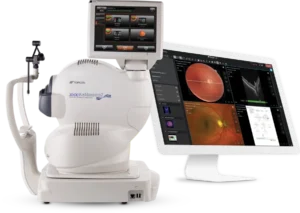
- One-touch OCT with integrated true-color fundus photography
- Wide 12×9 mm scan covering macula and disc in a single pass
- Predictable workflow for primary care and comprehensive clinics
- Optional OCT-A without increasing workflow complexity
- Compact, single-seat design fits tight lanes
Cons
- Not as customizable as research-oriented platforms
- Stability depends more on patient fixation than tracking
- Advanced analysis depth is lighter compared with disease-focused systems
Optovue iScan 80
Pros
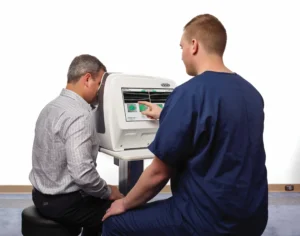
- Voice-guided, automated capture suited for lean or rotating staff
- Consistent scan placement across operators
- Solid RNFL, GCC, and macular trend performance
- Small footprint and easy day-one onboarding
- Cost-efficient for single-site or satellite environments
Cons
- Not a multimodal system (fundus camera is separate)
- OCT-A adoption usually requires additional setup or training
- Fewer customizable scan protocols for disease-focused clinics
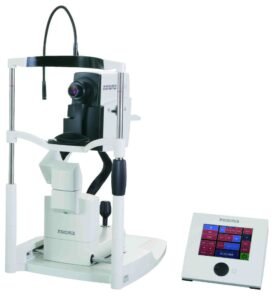
Heidelberg SPECTRALIS
Pros
- TruTrack + AutoRescan for the most precise follow-up alignment
- Dense, customizable protocols for retina, glaucoma, and neuro clinics
- Modular platform with upgrade options (MultiColor, BluePeak, OCT-A)
- Strongest long-term data consistency for progression analysis
- Extensive academy resources and deep technician training support
Cons
- Longer learning curve for staff
- Larger footprint and higher initial investment
- Setup and protocol refinement take more time per patient
Spec Snapshot — Side-by-Side Table
Specification | Topcon Maestro2 | Optovue iScan 80 | Heidelberg SPECTRALIS (OCT2) |
Scan Speed (A-scans/sec) | 50,000 | 80,000 | 85,000 |
Tracking / Stabilization | Robotic alignment; speckle reduction | Automated positioning workflow | TruTrack eye tracking + AutoRescan |
OCT-A Availability | Optional | Optional (varies by config) | Available (module-dependent) |
Fundus / Multimodal | Integrated true-color fundus | Not integrated (fundus separate) | Modular system (MultiColor, BluePeak, etc.) |
Widefield Coverage | 12×9 mm macula+disc | 12×9 mm en-face view; standard cubes | Customizable posterior pole protocols |
Small Pupil Performance | ≥2.5 mm | ≥2 mm | Varies by module; strong tracking assists |
Footprint | Compact single-seat OCT+fundus | Compact standalone tabletop | Larger modular workstation |
Typical Training Time | Short (one-touch workflow) | Very short (automation + voice guidance) | Long (advanced controls and protocols) |
Which OCT Fits Your Clinic?
Choosing among these three often comes down to your clinic’s mix, staffing model, and the kind of follow-up you rely on. Here’s a clear way to match each system to the environment where it performs best.
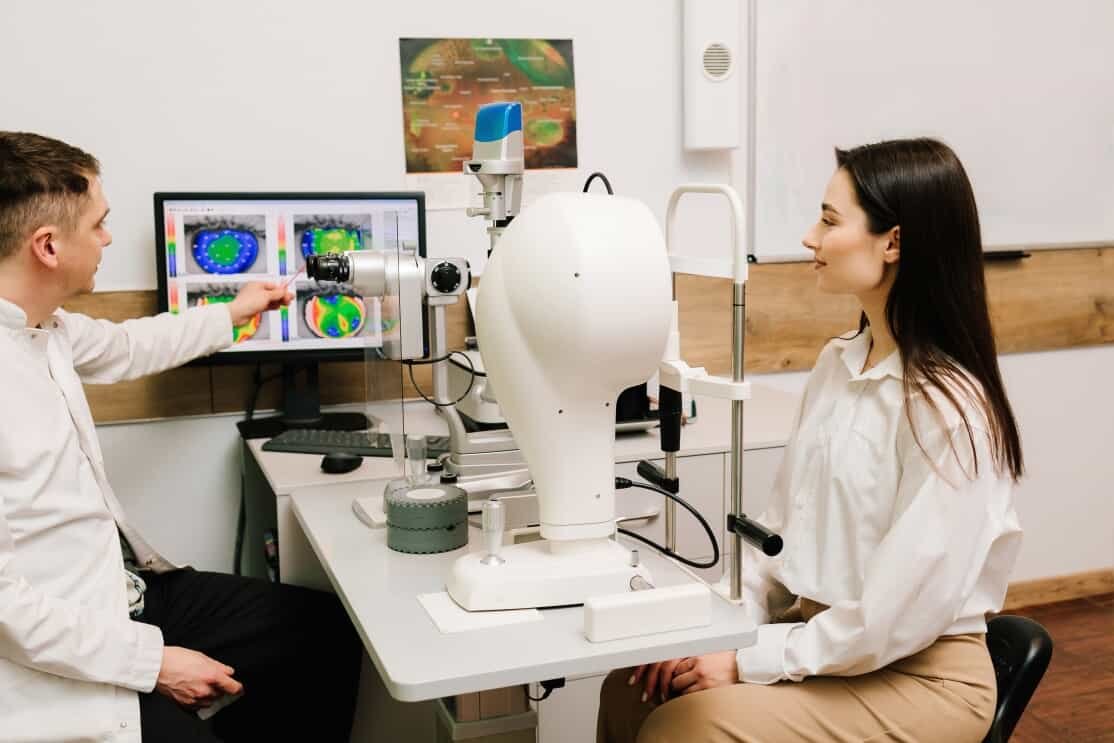
If your clinic runs on throughput and needs OCT + fundus in one seat → Maestro2
Choose Maestro2 if you want:
- A single device that handles OCT and true-color fundus
- Faster diabetic and comprehensive exams with fewer room changes
- A wide macula+disc scan without extra positioning
- Simple onboarding for technicians without giving up capability
- Optional OCT-A without complicating workflow
This fit works well for: Primary OD clinics, high-volume comprehensive care, and general medical retina.
If your staffing is lean or rotating and you need predictable consistency → iScan 80
Choose iScan 80 if you want:
- Automated, voice-guided capture that any technician can run
- Stable RNFL/GCC/macula trends regardless of who scans
- Minimal training time and low variation between operators
- A compact system for satellites or multi-room setups
- Straightforward structural imaging with clean reports
This fit works well for: Lean practices, satellite locations, and clinics with frequent staff turnover.
If you manage disease long-term and require the tightest follow-up → SPECTRALIS
Choose SPECTRALIS if you want:
- The strongest scan-to-scan alignment for chronic disease
- TruTrack + AutoRescan for reliable RNFL, GCC, and macular trends
- Dense, customizable protocols for subspecialty care
- An upgradeable platform (MultiColor, BluePeak, OCT-A)
- A long-term dataset you can trust over years of follow-up
This fit works well for: Retina clinics, glaucoma subspecialists, neuro-ophthalmology, and academic centers.
Mini Case Notes
1. OD Clinic Throughput Win — Maestro2
A high-volume OD clinic needed to shorten room time and reduce back-and-forth between imaging stations. With Maestro2, technicians took a true-color fundus image and OCT in one seat. This eliminated the need to reposition and made the diabetic visit flow more smoothly.
The wide 12×9 mm scan gave enough context for disc–macula review without extra steps, and the one-touch capture helped new staff become productive quickly. The improvement was immediately evident in fewer delays and a more predictable schedule.
2. Satellite Rapid Onboarding — iScan 80
A satellite location with rotating staff struggled to maintain consistent RNFL and GCC scans. After switching to iScan 80, the voice-guided workflow standardized capture, and visit-to-visit variation dropped noticeably. Training new technicians became a single-session task, keeping the site stable even as staffing shifted. The clinic obtained more consistent data without needing a dedicated imaging lead.
3. Disease Clinic Follow-Up Precision — SPECTRALIS
A retina and glaucoma-focused clinic needed tighter long-term alignment for chronic disease monitoring. SPECTRALIS gave them the stability they needed.
AutoRescan placed each follow-up scan in the same anatomical location. This reduced noise in their trend lines.
Dense, customized posterior pole scans helped document subtle changes around pathology. Over time, the team found fewer borderline calls and greater confidence in progression analysis.
FAQs
Is a higher scan speed always better than tracking or averaging?
Not necessarily. Higher kHz speeds up acquisition time.
However, tracking and averaging are more important for scan stability. They also help reduce noise and improve repeatability, especially in eyes that do not fixate well.
SPECTRALIS benefits most from tracking; Maestro2 uses robotic alignment and speckle reduction; iScan 80 relies on standardized positioning. In difficult eyes, stability usually matters more than raw speed.
Do I need OCT-A on day one?
Only if your clinic relies on vascular imaging for decision-making. OCT-A is helpful for early diabetic changes, CNV suspicion, and ischemic patterns, but it adds interpretation time and requires trained staff. Many practices begin with structural OCT, then add OCT-A later as their disease mix or diagnostic needs grow. If OCT-A will be routine, SPECTRALIS offers the most control; if it will be occasional, Maestro2 covers most needs.
How quickly can technicians reach reliable RNFL, GCC, and macular scans?
It depends on the platform.
- iScan 80: Often within the first session due to automated capture.
- Maestro2: Typically, within a short onboarding window, one-touch capture helps.
- SPECTRALIS: Longer learning curve, but once mastered, technicians gain more control and higher follow-up precision.
Clinics with rotating staff tend to favor iScan 80 or Maestro2 for this reason.
How do I manage multi-site data and consistency?
For multi-location clinics, consistency comes from both software and workflow:
- SPECTRALIS: strongest for long-term, multi-site alignment due to TruTrack + AutoRescan.
- Maestro2: straightforward export, easy to integrate into most EMRs, suitable for standardized single-site workflows.
- iScan 80: stable internal consistency when multiple technicians use the device, making it suitable for satellites.
For networked clinics, the key is to maintain uniform scan protocols across sites, regardless of platform.
Is small-pupil performance a concern?
All three devices handle smaller pupils reasonably well, though in different ways:
- iScan 80 can capture with pupils as small as 2 mm.
- Maestro2 supports ≥2.5 mm with good stability.
- SPECTRALIS benefits from tracking rather than relying solely on small-pupil optics.
In very small pupils, fixation stability often matters more than optics.
Does fundus integration matter?
Integrated color fundus is helpful for a quick structural overview without moving the patient.
- Maestro2 includes it natively.
- iScan 80 requires a separate fundus camera (iCam12) for color imaging.
- SPECTRALIS offers multimodal options via modules.
Clinics centered on comprehensive exams often prefer integrated systems for speed.
Conclusion
Selecting the right OCT Machine comes down to how your clinic works day to day. Image stability, follow-up consistency, technician onboarding, and long-term support often matter more than headline specs. Maestro2, iScan 80, and SPECTRALIS all deliver strong performance, but each one fits a different clinical environment.
If your priority is fast, predictable throughput with OCT and fundus cameras in one seat, Maestro2 is a practical match. If staffing is lean or rotating and you need reliable scans regardless of who is imaging, iScan 80 keeps the workflow steady.
If you have a chronic disease, you need regular monitoring. SPECTRALIS offers the accuracy you need. It is also durable, which is important for specialized care.
No matter which direction you choose, base your decision on your clinic’s needs. Consider follow-up expectations and training plans. This will create a system that supports your team for many years.
At Dauh Eye Care, we help practices evaluate OCT options with real-world workflow in mind. If you need help comparing options or setting up a demo, we are here to support you.
